
Houston Software Executive Charged With Largest Tax Evasion Case In History Against An Individual
Case involves $2 billion in income hidden abroad, authorities say, making it largest tax case ever against an individual. Houston Software Executive Charged With Largest Tax Evasion Case In History Against An Individual
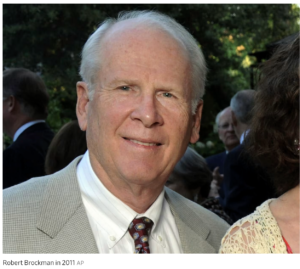
A Houston software executive was charged Thursday with hiding approximately $2 billion in income from U.S. tax authorities over 20 years, in what officials said was the largest criminal case ever brought against a person accused of evading U.S. taxes.
Robert T. Brockman, chief executive of automotive software-maker Reynolds & Reynolds Co., was indicted on charges including tax evasion, money laundering, failure to disclose assets held overseas and wire fraud. Mr. Brockman is the sole investor in the first private-equity fund managed by Vista Equity Partners, a firm founded by billionaire Robert Smith.
Authorities said Mr. Brockman concealed gains he made in Vista’s funds from the Internal Revenue Service.
Mr. Smith on Thursday admitted to willfully evading $43 million in federal taxes from 2005 to 2014 and agreed to cooperate with the continuing investigation. Under a settlement reached with the Justice Department, he will pay $139 million in fines and back taxes but won’t be prosecuted.
The charges against Mr. Brockman, 79 years old, were unsealed Thursday in San Francisco federal court. Mr. Brockman for years directed investments of tens of millions of dollars into Vista’s funds, according to the indictment. Prosecutors say he used secret bank accounts in Bermuda and Switzerland to hide income, but the indictment doesn’t specify how much tax Mr. Brockman skipped by hiding offshore the $2 billion he earned from Vista’s funds.
Mr. Brockman pleaded not guilty on all counts and was released on a $1 million bond after a hearing conducted remotely. “We look forward to defending him against these charges,” said his attorney, Kathryn Keneally of Jones Day.
A spokesman for Vista declined to comment. An attorney for Mr. Smith declined to comment.
A spokeswoman for Ohio-based Reynolds & Reynolds said: “The allegations made by the Department of Justice focus on activities Robert Brockman engaged in outside of his professional responsibilities with Reynolds & Reynolds. The company is not alleged to have engaged in any wrongdoing, and we are confident in the integrity and strength of our business.”
Mr. Brockman, a former Marine Corps reservist, started working at Ford Motor Co. upon graduation from college and later accepted a job at International Business Machines Corp. selling auto-parts-inventory and accounting data-processing services.
He founded Universal Computer Services Inc. in 1970 and became chairman and CEO of Reynolds & Reynolds when it acquired his company in 2006, according to a biography on the website of the Brockman Foundation, his family charity.
Closely held Reynolds & Reynolds, which makes software for auto dealerships, and its affiliated companies have roughly 5,000 employees and annual sales of about $1.4 billion, the foundation website says.
Messrs. Brockman’s and Smith’s alleged tax evasion was “brazen, intentional and significant,” said Jim Lee, chief of criminal investigations for the Internal Revenue Service. “These allegations should disgust every American taxpayer as well, because the law applies to all of us when it comes to tax and paying our fair share,” Mr. Lee said.
“I have not seen this pattern of greed or concealment and cover-up in my 25-plus years as a special agent,” Mr. Lee added.
Mr. Brockman set up a complex network of offshore companies and trusts designed to conceal $2 billion in gains earned from investments in Vista’s private-equity funds, according to the indictment. Vista wired money to bank accounts in Bermuda and Switzerland owned by an entity controlled by Mr. Brockman.
Mr. Brockman hid his control of the offshore entities by filing false tax returns, U.S. Attorney David L. Anderson said at a press conference Thursday in San Francisco. The misconduct lasted from 1999 to 2019, authorities said.
“Complexity will not hide crime from law enforcement,” Mr. Anderson said. “We will not hesitate to prosecute the smartest guys in the room.”
To keep the tax evasion secret, Mr. Brockman shredded documents and used code words over encrypted email accounts, calling himself “Permit” and referring to the IRS as “the house,” Mr. Anderson said. A computer program called “Evidence Eliminator” was purchased by a person who managed Mr. Brockman’s offshore entities, according to the indictment, which didn’t name the person.
Mr. Brockman was also charged with wire fraud over his alleged trading of debt issued by his own company, in violation of an agreement with investors who purchased the securities. The debt was syndicated in 2006 through banks including an arm of Deutsche Bank AG, which the indictment says was deceived about Mr. Brockman’s trading.
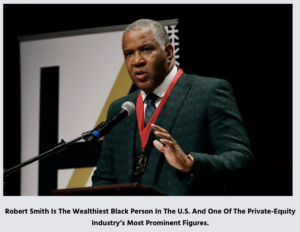
While little known on Wall Street, Mr. Brockman helped launch the career of Mr. Smith, who has become the wealthiest Black person in the U.S. and one of the private-equity industry’s most prominent figures, thanks to his firm’s high returns and unique strategy for turning around software companies—as well as his own splashy philanthropy.
Messrs. Brockman and Smith met in 1997 when Mr. Smith was an investment banker at Goldman Sachs Group Inc. working to help sell Mr. Brockman’s company, according to a statement of facts attached to Mr. Smith’s non-prosecution agreement. Mr. Brockman told Mr. Smith no taxes would be owed on the sale because the company was owned by a foreign trust located in Bermuda that had been set up by Mr. Brockman’s father in the 1980s, according to the statement.
The sale didn’t happen, but Mr. Brockman urged Mr. Smith to set up a private equity fund in which Mr. Brockman would be the sole outside investor, the document states. Mr. Smith left his banking job to start the private-equity firm and has been in charge of Vista ever since.
Mr. Smith last year pledged to pay all student debt incurred by the 2019 graduating class at Morehouse College and their parents. The historically Black institution in Atlanta said the donation amounted to $34 million.
The announcement of a non-prosecution agreement for Mr. Smith was unprecedented, said Jeffrey Neiman, a former federal tax prosecutor. The Justice Department doesn’t typically announce such leniency deals with individuals, Mr. Neiman said.
“In some ways, it does kind of conflate the message of whether bad deeds can go away with the payment of a lot of money and you can avoid the criminal justice system,” said Mr. Neiman, now a partner at Marcus, Neiman Rashbaum & Pineiro LLP.
Mr. Smith’s cooperation with the government “put him on a path away from indictment,” Mr. Anderson said. “It is never too late to tell the truth.”
Mr. Smith, 57, whose net worth Forbes has estimated at more than $5 billion, founded Vista in 2000 with $1 billion from a charitable trust established by Mr. Brockman’s family. The Vista chief put over $200 million of his own profits into one offshore entity and used another to conceal his ownership and control of the first entity, the government said Thursday.
While some of the money in the offshore entity ultimately went into Fund II Foundation, a charity Mr. Smith created in 2014, he withdrew untaxed funds for his personal benefit from 2005 to 2013, according to a statement he signed with prosecutors on Oct. 9.
He spent millions of it to buy and renovate a vacation home in Sonoma, Calif., to purchase two ski properties and a piece of commercial property in France and to make improvements to a residence in Colorado, the statement said.
Mr. Smith moved to Switzerland in 2010, when he used untaxed income to buy the winter homes in the French Alps.
Mr. Smith’s charitable donations and political connections didn’t play a role in the deal he got with the Justice Department, Mr. Anderson said.
“This non-prosecution agreement underscores the importance of cooperation with a federal criminal investigation,” Mr. Anderson said. “That’s the message we intend to send.”
Updated: 10-14-2020
Vista Equity’s Robert Smith Reaches Settlement With DOJ In Tax Probe
Billionaire is set to pay $140 million and admit liability for additional taxes owed but won’t be prosecuted.
Robert Smith, the billionaire chief executive of Vista Equity Partners, has reached a $140 million settlement with the Justice Department, ending a yearslong criminal tax probe, according to people familiar with the matter.
As part of the settlement, Mr. Smith will enter into a nonprosecution agreement, the people said. He will admit liability for additional taxes owed and not properly filing foreign bank account reports but won’t be prosecuted.
He will agree to abide by certain conditions set forth by the government, the people said.
The settlement includes a penalty of $85 million, back taxes of roughly $30 million and about $25 million of interest, one of the people said. It is among the largest known agreements by a U.S. taxpayer to resolve issues involving undeclared offshore accounts.
The settlement is a result of a four-year criminal inquiry by officials in the Justice Department’s Tax Division and the U.S. attorney’s office for the Northern District of California.
At issue was whether Mr. Smith failed to pay U.S. taxes on more than $200 million in assets from Caribbean entities set up by the sole investor in Vista’s first private-equity fund. These assets ended up flowing into a charitable foundation Mr. Smith created.
Much was at stake in the case for Mr. Smith and Vista, which previously told investors it wasn’t a subject of the investigation.
Institutions that invest in private-equity funds have become increasingly focused on corporate governance when deciding where to put their money.
Depending on the language in Vista’s fund documents, the firm’s existing investors might have had the power to pull their money if Mr. Smith had been convicted of a crime, according to fund lawyers.
Mr. Smith, the wealthiest Black person in the U.S., with a net worth of more than $5 billion, founded Vista in 2000 when he was in his late 30s with $1 billion from a charitable trust established by the family of Houston businessman Robert Brockman.
The commitment to Vista’s maiden fund came with the stipulation that a portion of the profits Mr. Smith was entitled to be directed into an offshore entity, structured as a charitable trust, according to a person familiar with the matter.
Mr. Brockman had the power to seize control of the offshore entity at any point until the fund was wound down, the person said.
The Vista chief paid taxes on the portion of profits that was distributed directly to him, but didn’t pay taxes at the time on the portion that was directed to the offshore structure, the person said.
The Justice Department claimed—and Mr. Smith has ultimately agreed—that he should have paid taxes on those assets.
The money in the offshore entity ultimately went into Fund II Foundation, a charity Mr. Smith created in 2014. The foundation has made significant contributions to support scholarships for minority students interested in science, engineering and math, research on breast cancer in Black women and the preservation of Martin Luther King Jr.’s birth and family homes.
It also backed Mr. Smith’s recently announced Student Freedom Initiative to ease the debt burden of students at historically Black colleges and universities.
Mr. Brockman is the subject of a larger investigation into potential U.S. tax fraud, Bloomberg News reported.
The cases are the latest in the government’s historic crackdown on undeclared offshore accounts held by U.S. taxpayers. In 2008, Justice Department prosecutors took banking giant UBS Group AG to court, piercing the veil of Swiss-bank secrecy. In 2009, UBS entered into a deferred prosecution agreement and agreed to pay $780 million.
In 2014, Credit Suisse Group AG paid $2.6 billion and pleaded guilty to helping Americans file false tax returns.
Between 2009 and 2018, more than 56,000 U.S. taxpayers with offshore accounts who were at risk of criminal tax prosecution entered an Internal Revenue Service limited-amnesty program and paid more than $11.1 billion.
Of that, over $500 million came from 150 individuals whom prosecutors successfully pursued for hiding money abroad. A few defendants also received prison sentences.
To date, foreign banks and asset managers have paid more than $6 billion in connection with encouraging the secret offshore accounts.
Based in Austin, Texas, Vista has more than $58 billion in cumulative capital commitments and more than 450 employees in five offices around the country. The firm has posted big returns by doing hundreds of deals for software companies, which it aims to improve by using a proprietary playbook.
Mr. Smith hasn’t been shy about deploying his considerable wealth. He owns a $59 million penthouse in Manhattan and two houses in Malibu, Calif., worth nearly $20 million apiece, among other properties.
He has made a splash with his personal philanthropy, most notably when he said last year he would pay off the college debt for the entire 2019 graduating class of Morehouse College, a historically Black men’s college in Atlanta.
Updated: 10-25-2020
The IRS Reels In A Whale Of An Offshore Tax Cheat—And Goes For Another
The U.S. pulls back the curtain on the shadowy world of wealthy American tax evaders.
U.S. tax officials have thrown a historic one-two punch at wealthy Americans hiding money offshore.
On Oct. 15, they announced that Robert Smith, the 57-year-old private-equity billionaire who founded Vista Equity Partners, admitted he criminally evaded taxes on more than $200 million of income from 2000 through 2015 by using secret foreign accounts in the Caribbean and Switzerland.
Mr. Smith, who is famous for announcing at Morehouse College’s graduation that he would pay off student loans for the class of 2019, will pay $139 million to the Internal Revenue Service in taxes and penalties. He will also forgo claims to $182 million in deductions for charitable donations, which could add more than $65 million to what he owes the IRS. But he won’t be prosecuted.
At the same time, the U.S. officials chargedRobert Brockman, a Houston-based billionaire and software CEO who was the sole investor in Mr. Smith’s first private-equity fund, with hiding about $2 billion of capital-gains income from the IRS in secret offshore accounts from 2000 through 2018. Mr. Brockman, 79 years old, pleaded not guilty and was released on $1 million bond.
The two cases are landmark events in a U.S. crackdown on undeclared offshore accounts that has been underway since 2009. Mr. Brockman’s alleged evasion of tax on $2 billion is the largest criminal tax prosecution ever brought, according to the Department of Justice, and Mr. Smith’s $139 million payment is among the largest made in connection with secret offshore accounts.
“These extraordinary cases show the reach of the IRS and Department of Justice in tracking hidden assets around the globe. High-net-worth individuals should get their houses in order before the IRS comes knocking,” says Caroline Ciraolo, a former top criminal tax attorney at the Department of Justice now with Kostelanetz & Fink.
The public documents in the Smith and Brockman cases offer a new window into the shadowy world of wealthy American tax evaders. They reveal both the large amounts of money involved and the lengths some people will go to in order to hide them—even at a time when tax rates were comparatively low.
Here’s a look at how it works, with a focus on Mr. Smith’s case because the facts aren’t in dispute. A spokesman for Mr. Smith and Vista Equity Partners declined to comment on his case. Mr. Brockman’s attorney did not respond to a request for comment.
Is There A Difference Between Tax Evasion And Planning To Minimize Taxes?
Yes, a big one. Tax avoidance can be legal, but tax evasion is the crime of willfully not paying taxes, and it must clearly be intentional. For example, Mr. Smith’s six-page confession uses the word “willfully” 25 times to describe his misdeeds.
How Do Offshore Accounts Enable Tax Evasion?
Secrecy is key. It often begins when an American puts assets into foreign trusts, companies, and other offshore accounts nominally owned by foreigners to make it look as though no tax is owed to the IRS. In reality, the assets are controlled by the American.
These offshore structures are hard for the IRS to investigate if they’re in countries without treaties or agreements easing the exchange of tax information.
Mr. Smith admitted that he controlled entities in Belize and the Caribbean island of Nevis that weren’t in his name.
Those entities received pretax profits from his private-equity funds. He also controlled undeclared bank accounts in the British Virgin Islands and Switzerland, and he withdrew millions of untaxed dollars from them to buy and improve luxury real estate in Sonoma, Calif., and Switzerland.
How Do Tax Evaders Keep Offshore Accounts Secret From The IRS?
They often employ go-betweens, and they frequently use encrypted communications and code names to cover their tracks.
For example, Mr. Smith said he paid an unnamed Houston lawyer who was a longtime adviser to Mr. Brockman more than $800,000 from 2000 to 2014 to set up and maintain false paper trails to hide his accounts.
Is Tax Evasion Using Offshore Accounts A New Trend?
No. It has existed for decades, but a sustained U.S. crackdown began in 2009 after Swiss banking giant UBS AG admitted it encouraged Americans to evade taxes and even sent bankers into the U.S. to market evasion schemes.
The crackdown, which had many facets, allowed the IRS to pierce the veil of bank secrecy in Switzerland and some other countries. As a result, more than 56,000 U.S. taxpayers at risk of criminal prosecution for undeclared offshore accounts entered an IRS limited-amnesty program and paid about $11 billion to resolve their issues. Foreign banks paid more than $6 billion.
How Did The Irs Detect Mr. Smith’s Tax Evasion?
It’s unclear. But in late 2013 or early 2014, Mr. Smith’s Swiss bank told him it was poised to turn over information about his account to the IRS. Many Swiss banks did this to reduce their own penalties arising from the U.S. crackdown.
Mr. Smith then applied to enter the IRS’s limited-amnesty program but was rejected in April, 2014—meaning that he was likely in the agency’s sights already.
Mr. Smith Is A Noted Philanthropist, Even Beyond His Paying Off The Morehouse Graduates’ Debt. Did His Offshore Accounts Benefit Charities?
Mr. Smith’s trust had charitable recipients, but he wasn’t required to make donations. At the end of 2014, he contributed a substantial amount of offshore assets to the Fund II Foundation, his U.S.-approved charity.
While under IRS investigation, Mr. Smith made waves as a donor. For 2016 and 2019 he was named one of the top 50 U.S. donors by the Chronicle of Philanthropy.
Charitable endeavors, such as Mr. Smith’s creation of a guide to help other colleges and donors replicate his Morehouse program, can burnish a defendant’s image in the eyes of prosecutors and judges. Neither he nor the government has said why he is giving up $182 million of charitable-donation deductions as part of his settlement.
Why Wasn’t Mr. Smith Indicted, If He Evaded Taxes On $200 Million?
David Anderson, the U.S. Attorney for the Northern District of California, which handled the case, said Mr. Smith’s agreement to cooperate with the government—presumably in Mr. Brockman’s case—”put him on a path away from indictment.”
DOJ procedures don’t allow defendants to buy their way out of prosecutions, but cooperation can be grounds for leniency. Still, some tax specialists find Mr. Smith’s agreement unusual.
Jack Townsend, a lawyer who publishes the Federal Tax Crimes blog, says, “He got a hell of a deal, considering what he did.”
Updated: 11-6-2020
Swiss Freeze More Than $1 Billion Held by Tech Mogul Robert Brockman
Swiss prosecutors froze more than $1 billion held in bank accounts belonging to Houston software tycoon Robert Brockman, who’s been charged in the U.S. for alleged tax evasion and money laundering.
A spokeswoman at the Geneva prosecutor’s office said that accounts were frozen but didn’t specify what banks held the funds.
Brockman was indicted in October by U.S. federal prosecutors for allegedly using a network of secret Caribbean entities to evade taxes on $2 billion in investment income in what may be the largest prosecution of its kind in U.S. history. Brockman is accused of using a Bermuda-based family charitable trust and other offshore entities to hide assets from the Internal Revenue Service while failing to pay taxes. He was also charged with money laundering and other crimes.
The case is “the largest-ever tax charge against an individual in the United States,” David Anderson, the U.S. prosecutor in San Francisco, said last month.
A message left with Brockman’s lawyer asking about his Swiss bank accounts wasn’t immediately returned. The U.S. Department of Justice didn’t immediately reply to a request for comment.
About $950 million is held at Mirabaud & Cie., according to local blog Gotham City, which first reported on the asset freeze.
A spokesman for Mirabaud declined to comment.
Prosecutors were helped by Robert Smith, the CEO of Vista Equity Partners, who set up his private equity fund 20 years ago with a $1 billion injection from Brockman’s trust. Smith avoided prosecution by agreeing to cooperate against Brockman. He also admitted he failed to pay $30 million in taxes, and will pay $140 million in back taxes, fines, and penalties, according to people familiar with the matter.
Brockman faces a 39-count indictment returned by a San Francisco grand jury and unsealed on October 15. Appearing by video conference from Houston the same day, Brockman pleaded not-guilty to the charges and denied the government’s allegations that he should forfeit proceeds from wire fraud.
The court agreed to allow Brockman to post $1 million bond, remain out of custody and to travel to several parts of the U.S. to meet with his lawyers and conduct business. Brockman is the chief executive officer of Reynolds & Reynolds, a leading vendor of software used to manage auto dealerships.
Updated: 2-3-2021
How Billionaire Robert Smith Avoided Indictment In A Multimillion-Dollar Tax Case
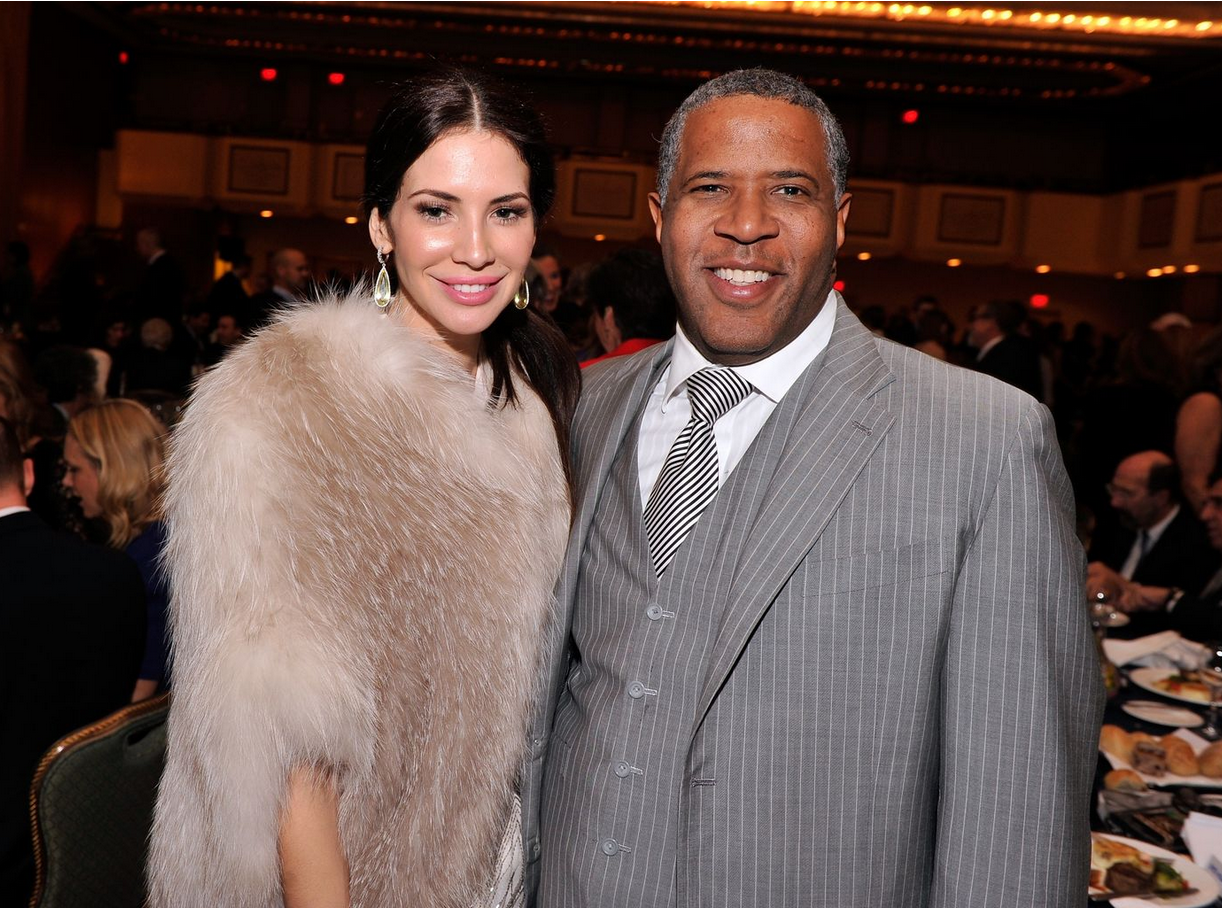
How Vista Equity Partners’ boss parlayed connections, charity and cooperation to win a non-prosecution agreement from the Justice Department.
U.S. prosecutors and Internal Revenue Service agents spent four years piercing the veil of secrecy that billionaire money manager Robert F. Smith wove to hide more than $200 million in income. Last year, according to people familiar with the matter, a team led by the Justice Department’s top tax prosecutor argued to then-Attorney General William Barr that the evidence warranted indicting Smith, who had made headlines for pledging to pay the student debt of a Morehouse College graduating class.
But rather than expose a man worth about $7 billion to a possible prison term and potentially force him to give up control of his private equity firm, Vista Equity Partners, Barr signed off on a non-prosecution agreement. It required Smith to admit he had committed crimes, pay $139 million and cooperate against a close business associate indicted in the largest tax-evasion case in U.S. history—Texas software mogul Robert T. Brockman.
Smith, the richest Black person in the U.S. according to the Bloomberg Billionaires Index, agreed to cooperate after spending years raising his public profile as a philanthropist and advocate for racial justice. He praised the Trump administration’s efforts to provide economic assistance to minority business owners amid the Covid-19 pandemic. As his wealth tripled over the past five years, he also gave away more than he had hidden abroad. All that complicated the possible prosecution of a defendant whom jurors may have viewed sympathetically.
This account of what went on behind the scenes leading up to the non-prosecution agreement is based on interviews with a dozen people involved in the negotiations or briefed on them. All requested anonymity because they aren’t authorized to talk about the case. They tell a story about a man who spent freely on his defense and worked all the angles.
Smith began assembling a team of prominent attorneys after his tax problems surfaced in 2013. They included former Acting Attorney General Mark Filip and former Obama White House Counsel W. Neil Eggleston at Kirkland & Ellis, where Barr had worked before going to the Justice Department. Charles Rettig, then in private practice and now IRS commissioner, was engaged, as were former Commissioner Fred Goldberg and Mark Matthews, a former deputy commissioner.
As Justice Department tax prosecutors pushed closer to an indictment in late 2019, another issue came into play—Smith’s connection to a national security matter—according to people who heard about the discussions. The people, who don’t have security clearances, said they didn’t know the specifics, whether it involved Vista or how Smith might have been of assistance to the government.
A schism between tax prosecutors and national security officials led to months of wrangling. Twice the matter went up to Barr, once at the end of 2019 and again in July. Late in the game, facing an imminent indictment, Smith agreed to cooperate against Brockman, whose $1 billion investment launched his private equity career two decades earlier.
In the end, Barr intervened to settle the dispute, two of the people said. The decision to refrain from charging Smith was conveyed in a July 21 email to Filip from top tax prosecutor Richard Zuckerman reviewed by Bloomberg News. Smith’s team would get what they wanted: a stay-out-of-jail card.
It would take weeks to negotiate the details of the agreement, which allowed Smith, 58, to remain at the helm of a firm that manages more than $73 billion for public pension funds and other wealthy investors. He’s free to carry on with a lifestyle that has included homes in France, New York City, Colorado, California wine country, Austin, Texas, and North Palm Beach, Florida. And he can keep playing starring roles at institutions such as Cornell University, which named an engineering school after him in 2016, and Carnegie Hall, where he became chairman that year.
The agreement came at a cost. In a six-page statement of facts, Smith acknowledged evading more than $43 million in taxes over a decade and repeatedly filing false tax forms. He agreed to pay a penalty, forsake tax-deduction claims for $182 million of charitable contributions and cooperate for five years with prosecutors on investigations, including their case against Brockman, whose web of opaque Caribbean entities was allegedly used to hide $2 billion in income earned from Vista.
The Justice Department got an attention-grabbing fine and a cooperation agreement without having to risk losing at trial. But the decision to let Smith walk away unscathed by criminal charges doesn’t sit well with some former prosecutors, who said it illustrates how the richest Americans can maneuver the justice system in their favor. “This case sends a message that wealthy people will be treated differently than not-so-wealthy people,” said Paul Pelletier, a former Justice Department fraud section supervisor now in private practice who wasn’t involved in the case. “People of lesser economic means normally don’t avoid getting charged when they cooperate. The magnitude of the tax fraud here is enormous.”
Smith, his lawyers and his company all declined to comment. So did Barr and a spokesperson for the Justice Department. An IRS spokesperson said of Rettig: “Without acknowledging whether the commissioner represented any particular client in any particular matter while he was in private practice, the commissioner recused himself from all such matters upon taking office.” Brockman has pleaded not guilty and denies wrongdoing in his case.
In the months leading up to the agreement, as his legal fate hung in the balance, Smith told Vista insiders his tax dispute was strictly a personal matter, people familiar with the conversations said. He hosted lavish holiday celebrations in December 2019 for clients and employees, including a New York-themed party celebrating his firm’s 20th anniversary at an airport hangar in Smith’s hometown of Austin.
But things weren’t looking good. Around that time, prosecutors told Smith’s lawyers they had enough evidence to bring criminal tax charges, two people with knowledge of the discussions said.
It’s also when some people close to Vista say they first heard talk of a national security matter that might help Smith avoid tax charges. Smith’s legal team, which had been working its way up the tax division hierarchy, swung into high gear, arguing for a civil settlement.
Vista had long counted on Kirkland, one of the world’s largest law practices, as its main legal adviser. The private equity firm, which buys and sells enterprise software companies, generates annual billings for Kirkland of about $80 million, according to people with knowledge of the matter. Its chief operating officer, David Breach, who’s also the firm’s top lawyer, had been a partner at Kirkland. The firm represents some of the biggest corporations and private equity companies, including Blackstone, Carlyle Group and KKR. Filip, who works out of the Chicago office, has helped negotiate settlements for BP and Boeing. Another partner, Norm Champ, a former head of the Securities and Exchange Commission’s investment management division, was involved in discussions about whether Smith could remain at Vista given the serious nature of the findings, two people familiar with the matter said.
In addition to attorneys from Kirkland, there were lawyers from Caplin & Drysdale, a leading U.S. tax shop, and Skadden, Arps, Slate, Meagher & Flom. Smith also retained Kenneth Wainstein, who previously led the Justice Department’s national security division. Reid Weingarten, one of the country’s top white-collar trial attorneys, was prepared to try the case if Smith were indicted.
By the end of 2019, Smith’s lawyers secured a meeting with the department’s top tax officials to make their case. It then went to Barr, who also considered the national security matter, people familiar with the discussions said. Assistant Attorney General for National Security John Demers got involved, and Barr eventually weighed in, telling tax and national security officials to resolve the dispute between their divisions, according to the people. Barr also made it clear that for Smith to avoid indictment, he would have to cooperate against Brockman and pay a hefty penalty.
Over the next few months, as the Covid-19 pandemic swept across the U.S., Smith raised his public profile. He joined President Donald Trump and Vice President Mike Pence in March to discuss the economy with fellow billionaire financiers Ken Griffin, Dan Loeb and Stephen Schwarzman. And he praised White House efforts to get Cares Act assistance to minority communities.
In a May 10 appearance on Meet the Press, Smith said Treasury Secretary Steven Mnuchin and Ivanka Trump were “very engaged” in the effort. He started having daily calls with Mnuchin and weekly ones with the president’s daughter, the Washington Post reported in June, quoting her saying she’d had “very substantive discussions” with Smith about supporting businesses in minority communities. Smith “didn’t have a particular agenda” and was “legitimately interested in helping the program,” Mnuchin told the paper. “You know, the dynamic I’ve been focused on is working with the administration, with Ivanka and Secretary Mnuchin in particular, as well as on both sides of the aisle,” Smith said on Fox Business on June 17.
Smith’s open support of the Trump administration didn’t seem to influence the Justice Department. In June, prosecutors told his lawyers they were still planning to indict Smith on charges of conspiracy and filing false tax returns, three of the people familiar with the discussions said.
Smith’s lawyers continued to push for a non-prosecution agreement, and the case went to Barr a second time, people with knowledge of the matter said. Again, the attorney general drew a line: He told Zuckerman, the top tax prosecutor, that he would green-light an indictment if Smith didn’t agree to cooperate fully against Brockman and pay a sizable penalty, one person said.
In July, Smith’s team made a direct appeal to Barr, according to people with knowledge of the matter. It isn’t known what was said in that meeting, or whether the national security matter came into play. But on July 21, Zuckerman reached out to Filip to set up a conference call, saying the Justice Department’s tax division “will not be presenting the indictment of Mr. Smith to a grand jury at this time,” according to an email reviewed by Bloomberg.
The call two days later was the first step in negotiations that would lead to the agreement Smith signed in early October and that the Justice Department announced later that month, along with Brockman’s indictment. Barr approved the deal after tax prosecutors assured him they were satisfied with Smith’s offer, according to a person familiar with the discussions. The agreement also had the advantage of keeping the national security matter under wraps.
In the weeks leading up to the announcement, Smith had pressed his legal team to obtain an assurance that the government wouldn’t publicly disclose his misconduct, people familiar with the matter said. The request was denied.
“Smith committed serious crimes, but he also agreed to cooperate,” David Anderson, the U.S. attorney in San Francisco, said at an Oct. 15 press conference. “Smith’s agreement to cooperate has put him on a path away from indictment.” Jim Lee, chief of criminal investigation for the IRS, made it clear that the alleged tax evasion by Smith and Brockman was a serious matter. “I have not seen this pattern of greed or concealment and cover-up in my 25-plus years as a special agent,” he said.
The son of two Denver educators, Smith earned a degree in chemical engineering at Cornell and an MBA at Columbia University. He went to work as an investment banker at Goldman Sachs Group Inc. in 1994 and moved to Silicon Valley as part of its push into tech. A few years later he tried to arrange a buyout for Brockman, whose company, now known as Reynolds & Reynolds, was emerging as a leading provider of software used to manage auto dealerships.
On the surface, the men had little in common. Brockman, a generation older than Smith, is a former Marine Corps reservist who early in his career sold software for IBM. But both men live in Texas, have homes in Colorado and brought an engineer’s eye to technology. They saw an opportunity in what became Vista’s trademark—buying business software ventures and increasing their value by managing them more efficiently.
A few years after they met, Brockman offered to put up $300 million to launch Smith into the private equity business. There would be at least $700 million more. But the money came with some take-it-or-leave-it conditions. Smith had to locate his first fund in the Cayman Islands, agree to settle any disputes outside U.S. courts and set aside some of the carried interest he earned from it to protect Brockman against losses, according to the statement of facts Smith signed as part of the settlement.
Smith concluded that Brockman was structuring the deal to prevent the IRS from learning about his investment. But he saw the proposal as a unique opportunity and went along, according to the statement. He even worked with one of Brockman’s lawyers to set up entities to help him dodge his own U.S. tax bill, he admitted.
Smith proved to be a private equity wizard. Vista’s first fund earned a net internal rate of return of 29% over its lifetime, according to Bloomberg data. Starting around 2005, some of Smith’s earnings from that fund went to a bank account in the name of Flash Holdings that Brockman’s lawyer had advised him to set up in the British Virgin Islands and that Smith controlled, according to the statement. He paid the lawyer $800,000 over 15 years to create a false paper trail, Smith admitted.
Also in 2005, Smith and his wife, Suzanne McFayden, whom he met at Cornell, purchased a $2.5 million home in California’s Sonoma County with untaxed income from a Caribbean bank account. A few years later they bought two ski properties and a commercial one in Megeve, France, with Smith directing that they be paid for with 13 million euros ($16 million) of untaxed funds from a Swiss bank account.
Smith filed a Report of Foreign Bank and Financial Accounts, or FBAR, for that year which didn’t disclose his financial interest in accounts in the British Virgin Islands and Switzerland. Although American citizens with foreign holdings are required to file such reports annually, Smith failed to do so in 2011, and his 2012 submission again didn’t list his interest in the Caribbean and Swiss accounts.
The following year McFayden filed for divorce, listing several homes and a private jet among the marital assets. Except for her original petition, the filings in that case are sealed. But during the contentious proceedings that followed, McFayden asserted that Smith’s assets included substantial foreign holdings, according to a person familiar with the matter. It was the divorce that piqued the government’s interest in Smith, two people said.
The prospect that Smith’s divorce could stir up unwanted scrutiny doesn’t appear to have surprised Brockman. Two years earlier Evatt Tamine, a Bermuda-based lawyer managing his offshore entities, received an email from a colleague. It said Brockman had “called concerned about the Robert Smith situation and what effect a nasty divorce might have on us,” according to a 2011 email the government filed in court. Tamine, who wasn’t charged with a crime and is cooperating with prosecutors, declined to comment.
Soon, pressure was building on Smith’s Swiss bank, Banque Bonhote & Cie SA. It was one of dozens of Swiss banks the U.S cracked down on over accounts hidden from the IRS. Banks could reduce their financial penalties if they convinced American clients to enter an IRS amnesty program that let taxpayers avoid prosecution.
Smith applied for the amnesty program but was rejected. Typically, the IRS turns down taxpayers if it already knows about their undeclared assets. Later, Smith filed a false FBAR for 2013, again not disclosing his financial interest in the BVI and Swiss accounts.
In 2014, the same year his divorce was finalized, Smith turned to Brockman for a $75 million loan, according to prosecutors. The following year he married Hope Dworaczyk, Playboy’s 2010 Playmate of the Year and a Celebrity Apprentice participant. The couple’s seven-month-old son floated down the aisle on an artificial cloud created for their wedding at a hotel on Italy’s Amalfi Coast. John Legend entertained.
Around that time, Smith directed a Belize-based entity he controlled to transfer $182 million in assets to a new charitable foundation. One of its first donations was $15 million for a music education program operated by the Carnegie Hall Society. In its 2015 tax year, the foundation gave at least $149 million to the United Negro College Fund, the National Park Foundation, Cornell and other organizations, according to an IRS filing.
Smith tried to get right with tax authorities by amending past returns, but prosecutors were undeterred. In 2016, a San Francisco grand jury began investigating. It issued subpoenas to some Vista limited partners, according to a person familiar with the matter. In 2018, Brian Sheth, Vista’s co-founder and president, and Tamine were asked to testify. Sheth, who wasn’t a target of the investigation, declined to comment.
That August, federal authorities raided the home in Texas of the attorney who’d set up offshore entities for Smith and Brockman. A few weeks later, IRS agents and Bermudian police seized documents and encrypted electronic devices from Tamine’s home.
In a letter to Vista investors after the settlement was announced, Smith wrote that “the essence of this case involves an offshore structure I created twenty years ago at the insistence of my only investor in my first private equity fund.” It was, he said, a “personal tax matter,” and “the Department of Justice never claimed that Vista or any Vista funds were involved or under investigation.”
Justice Department legal filings tell a more complicated story. The Brockman indictment mentions Vista more than 80 times. In one filing, the government wrote that his scheme included “a machine built of two components.” One, it said, involved the offshore entities Brockman had used to conceal his income and assets. The other was “an investment vehicle through which Defendant secretly funded his offshore structure. That vehicle was Vista Equity Partners.”
The two components were intertwined and “involved continuous contacts with Vista employees,” the government alleges. In one 2010 transaction, Brockman directed that a $799 million distribution from Vista be deposited in a Swiss bank account in the name of Point Investments, the entity he’d set up in the British Virgin Islands a decade earlier to invest in Vista. Two years after that transfer, Tamine, Brockman’s trust manager, wrote to his boss: “My relationship with Robert and his team at Vista is going very well,” according to a court filing.
Smith has continued to put a positive spin on events, carrying on much as before. Shortly after the settlement was announced, he pledged $50 million to programs at historically Black colleges and universities. He also bought a pair of North Palm Beach mansions for $48 million, the Wall Street Journal reported. In December, Vista closed on $2.7 billion in capital commitments, according to a company presentation reviewed by Bloomberg. But Smith will have to move forward without his co-founder, Sheth, whose resignation was announced on Thanksgiving Day.
In his letter to Vista investors, Smith said the government’s criminal investigation into his finances left him humbled but unbowed. “I am as committed as ever to moving forward as a CEO, an investor, a community leader, and a philanthropist—in order to continue to be a productive person trying to leave the world better than I found it,” Smith wrote.
That effort may not include taking the witness stand against Brockman, who stepped down as chief executive officer of Reynolds & Reynolds in November. His lawyers said in court that the 79-year-old is suffering from dementia. They said the case should be dismissed because he’s unable to assist in his own defense.
Prosecutors characterized the timing of the claim as suspicious and urged the court to regard it with “healthy skepticism.” A federal judge in Houston will decide if he’s competent to stand trial in the coming months.
Updated: 3-3-2021
The Billionaire Behind The Biggest U.S. Tax Fraud Case Ever Filed
Prosecutors accused Robert Brockman, a litigious, sometimes penny-pinching software entrepreneur, of hiding $2 billion from the Internal Revenue Service.
More than 20 years ago, a group of former salesmen for Houston software entrepreneur Robert Brockman sued their old boss, claiming in court that he had deprived them of commissions by directing a portion of customer payments to a Cayman Islands entity.
Mr. Brockman twice appealed to the Texas Supreme Court as he tried to avoid answering detailed questions about the offshore entity, and he settled the case in 2001 under confidential terms.
Although the salesmen didn’t realize it at the time, they had stumbled onto early signs of what the government later called the largest criminal case ever brought against a person accused of evading U.S. taxes.
Federal prosecutors in October charged Mr. Brockman with using a web of offshore entities to conceal about $2 billion in income from the Internal Revenue Service.
Mr. Brockman has pleaded not guilty to 39 criminal counts, including tax evasion, wire fraud, money laundering and evidence destruction. He and his attorneys didn’t respond to requests for comment.
Prosecutors allege the bulk of the tax evasion stemmed from profits Mr. Brockman made from investments with Vista Equity Partners, a private-equity firm he helped launch in 2000 and which now manages $73 billion in funds dedicated to software investments.
Vista founder Robert Smith, the wealthiest Black person in America, settled his own tax-evasion case with the government, which was made public on the day of Mr. Brockman’s indictment.
Mr. Smith has agreed to testify against his former mentor, one of at least two Brockman confidants to turn on him.
Some of the money in the criminal case against Mr. Brockman originated with the same Cayman Islands entity that the salesmen complained about years earlier, according to an IRS affidavit unsealed in December. The link between the two cases hasn’t been previously reported.
The record-setting case pits Mr. Brockman, a billionaire with a reputation as a relentless litigant, against the immense resources of the federal government.
Legal specialists say the government appears to have strong evidence, but federal prosecutors may face challenges trying the case because of the complexity of tax laws governing offshore trusts.
In another potential hurdle for the government, the 79-year-old Mr. Brockman claims in court documents he can’t be tried because he is suffering from dementia and is unable to assist in his own defense.
Prosecutors said in court filings that he could be faking a mental decline. A hearing on his competency is scheduled for June, and if the court sides with Mr. Brockman, the charges could be dropped or deferred.
Despite his wealth, Mr. Brockman was virtually unknown outside of a small circle in Houston and the automotive industry until his indictment was announced in the fall.
Court documents and interviews with his former employees, business associates and his younger brother portray him as a brilliant, sometimes penny-pinching executive with an antigovernment streak that led him to regard the IRS as a corrupt organization unfairly targeting taxpayers.
Mr. Brockman bought used furniture for company offices, rarely gave raises and forbade employees from smoking to save money on health insurance, according to former employees and associates.
He stayed at budget hotels and ate frozen dinners in his room during monthly visits to one of his company’s offices near Dayton, Ohio, a former vice president at his software firm recalled.
Most of the wealth he gathered over the years is held in a Bermuda trust that owns, among other things, nearly all of his software company. The firm, Reynolds & Reynolds Co., provides software to auto dealerships, and it had annual revenue of about $1.4 billion, according to a now-defunct Brockman charity website.
Mr. Brockman was chief executive of Reynolds & Reynolds until the indictment.
“The allegations made by the Department of Justice focus on activities Robert Brockman engaged in outside of his professional responsibilities with Reynolds & Reynolds,” a company spokeswoman said in a statement.
“Throughout numerous court filings and legal proceedings, the Company has never been alleged to have engaged in any wrongdoing in any way.”
The Bermuda trust has assets of at least $7.7 billion, including $1.4 billion in Swiss bank accounts, according to a confidential affidavit from Mr. Brockman’s wife that was filed with a Bermuda court and reviewed by The Wall Street Journal.
A lawyer for a former trustee suggested in a recent Bermuda court hearing the trust’s total value could be as high as $10 billion.
That level of wealth would rank Mr. Brockman around 50th on the most recent Forbes 400 list of U.S. billionaires, well ahead of Twitter Inc. CEO Jack Dorsey and Fidelity Investments magnate Edward Johnson III. Mr. Brockman never appears on the list.
Among the assets Mr. Brockman has amassed: a Bombardier private jet, a 209-foot yacht, a 17,000-square-foot residence in Houston and a 5,800-square-foot cabin in Aspen, Colo., according to public records and court documents filed by prosecutors.
The origin of his fortune dates back five decades, when Mr. Brockman founded a company that became a pioneer in developing software that helps automobile dealers manage nearly every aspect of their businesses, including inventory, pricing, promotion and credit reports.
He was among the first software executives to see the value of recurring revenue, locking customers into long-term contracts for a product that was essential to conducting business and difficult to substitute, former executives and customers said.
Over the years, Reynolds & Reynolds has been in litigation with numerous car dealers, some of whom alleged they were overcharged for mandatory upgrades, court documents show. The company denied the allegations and often won the cases.
Reynolds & Reynolds and its main competitor, CDK Global Inc., are the subjects of an antitrust probe by the Federal Trade Commission, according to a CDK securities filing. Reynolds & Reynolds declined to comment about the antitrust probe or past litigation. CDK didn’t respond to a request for comment.
Self-Made Man
Mr. Brockman and his younger brother, Thomas David Brockman, were raised in St. Petersburg, Fla. Their father, Alfred Eugene Brockman, was a gas-station owner, and their mother, Pearl, a physiotherapist, according to 1940 census records.
Dave Brockman recalled lean years growing up and said his brother “decided he didn’t love that and went out to make something of himself.”
Robert Brockman attended Centre College, a selective liberal-arts college in Kentucky, and paid his way partly by delivering laundry, his brother said. He married at age 18, according to records in Boyle County, Ky., and later divorced.
Mr. Brockman graduated from the University of Florida and after working at Ford Motor Co. shifted to International Business Machines Corp., where he became a top salesman. He married his current wife, Dorothy, in 1968.
The couple lived in Houston, where Mr. Brockman began teaching himself computer programming and started his software company, initially known as Universal Computer Systems Inc.
In building UCS, Mr. Brockman was particular about new hires, requiring that all job applicants take a test designed to determine their intelligence and suitability for a given role. Vista’s own employee-testing regimen is based on that.
After being hired, staffers had to account for every call at the office, and executives each week posted the names of those who made the most personal calls. Employees had to use a keypad to open doors around the building so managers could trace their movements.
Mr. Brockman would lead executives on dove-hunting trips to a ranch in Mexico. He kept a stash of guns at the company’s Houston headquarters and in the trunks of the fleet of Mercedes sedans parked in the garage at his Houston home, former employees and visitors recall.
Mr. Brockman’s yearlong sales training program was effective, former employees said. Alumni graduated to high-level sales roles at such companies as Microsoft Corp. and Oracle Corp.
He liked to keep employees on edge, recalled a former executive, Bobby Tyson, who said Mr. Brockman once asked him “when was the last time you shot somebody between the eyes.”
The phrase, Mr. Tyson learned, meant to fire an employee at random. “Everybody understands they could be next,” he recalled his boss saying.
Mr. Tyson, who described Mr. Brockman as a genius whom he still admires, said he once reluctantly carried out such a firing on orders from his boss.
Later, Mr. Tyson sued Mr. Brockman for unpaid compensation. He prevailed after a six-year court battle, which ended after Mr. Brockman’s appeal was rejected by the U.S. Supreme Court. Mr. Tyson said he ended up collecting about $2.5 million.
Mr. Brockman’s use of offshore entities started in 1981. That year, he and his late father flew to Bermuda to establish what became the A. Eugene Brockman Charitable Trust, Dave Brockman said.
The trust has given away more than $100 million to charities since 2004, court records show. It also has six human beneficiaries, according to Bermuda court documents: Mr. Brockman, his wife, their son Robert Brockman II and a grandchild, along with Dave Brockman and his wife.
Dave Brockman, who once worked for UCS, said he hadn’t had much contact with his brother for close to 20 years. He said the two had a falling out after Robert denied him a promotion he felt he deserved, and he quit.
He doesn’t believe his brother did anything illegal, he said, but doesn’t want any money connected to a criminal case. If offered money from the trust, Dave Brockman said, “I would refuse it. It’s tainted money as far as I’m concerned.”
Money Moves
The IRS was alerted more than 20 years ago to Mr. Brockman’s offshore activities as a result of the litigation by his former salesmen.
In court documents, the salesmen asserted Mr. Brockman founded the Cayman Islands entity not only to evade paying commissions but also to avoid federal taxes. Mr. Brockman denied the allegations and said he had sold the entity years before, while retaining preferred stock in it.
In the late 1990s, two attorneys for the salesmen met with an IRS agent, according to people familiar with the matter. The IRS around this time began an audit of Mr. Brockman and obtained records from Bermuda about the trust, according to a different person familiar with the matter.
The outcome of the inquiry couldn’t be determined. But when the Cayman Islands entity, Computer Terminals Ltd., was liquidated in the 1990s, “a substantial sum” made its way to a company in the Caribbean called Edge Capital Investments Ltd., according to the IRS affidavit.
Edge Capital was controlled by Mr. Brockman outside of the Bermuda trust structure, prosecutors have alleged.
Mr. Brockman allegedly used $30 million from Edge Capital to acquire the Aspen property and a Colorado fishing retreat, part of the purported tax evasion scheme, according to the indictment.
He also allegedly used Edge Capital to secretly purchase a portion of his own company’s debt—an act prohibited by provisions in the loan agreements—at a sharp discount in the wake of the 2008 financial crisis, the indictment said.
These allegations are potentially the most serious Mr. Brockman faces; each of the 20 wire-fraud counts related to the debt repurchase carries a maximum sentence of 30 years.
If Mr. Brockman’s case goes to trial, Mr. Smith, Vista’s chief executive, is expected to testify, marking a dramatic reversal in their lucrative relationship.
The two men met in the late 1990s, when Mr. Brockman was considering selling his company and was introduced to Mr. Smith, then a Goldman Sachs Group Inc. technology banker.
After Mr. Brockman decided against the sale, he presented an idea to Mr. Smith: He would back the younger man in a private-equity fund devoted to software—a rarity at the time.
Mr. Brockman agreed to make an initial pledge of $300 million, later increasing it to $1 billion, according to a statement of facts Mr. Smith signed in October as part of his deal with the government.
The arrangement carried one unusual condition. Mr. Smith had to put a portion of his share of the fund profits into an offshore structure similar to Mr. Brockman’s.
Mr. Brockman said he didn’t want his own foreign trust to be dragged into a U.S. court in the event of litigation against Vista, the statement of facts said.
Mr. Brockman was the only investor in Vista’s first fund, and became a major investor in a couple of subsequent funds. Many elements of Vista’s playbook for maximizing profits at software companies followed Mr. Brockman’s model, according to people familiar with Vista’s early years.
In 2006, Vista helped Mr. Brockman’s Universal Computer Systems finance the $2.8 billion acquisition of much larger Reynolds & Reynolds, putting Mr. Brockman atop one of the two dominant players in the auto-dealer software business.
Mr. Smith, 20 years younger than Mr. Brockman, became as high-profile as Mr. Brockman was publicity-shy. In 2019, Mr. Smith pledged to pay off the student loans held by the graduating class of Morehouse College, a historically black college in Atlanta.
He owns one of Manhattan’s most expensive properties—bought for nearly $60 million in 2018—and is chairman of Carnegie Hall. He divorced his wife and married the 2010 Playboy Playmate of the Year.
Messrs. Smith and Brockman were both targets of the government’s tax probe. But in October, Mr. Smith reached a nonprosecution agreement with the government that included Mr. Smith’s admission that he evaded paying taxes on more than $200 million in income, using an offshore arrangement similar to one allegedly used by Mr. Brockman.
Mr. Smith agreed to pay $139 million in back taxes and penalties and cooperate against Mr. Brockman, the government said.
Hidden records
Prosecutors allege Mr. Brockman set up an encrypted email system to communicate with those involved in his offshore structure. They referred to each other using such fishing-related code names such as “Permit,” for Mr. Brockman, and “Steelhead,” for Mr. Smith, according to the indictment; the IRS was “The House.”
Around 2007, Mr. Brockman hired a Bermuda attorney, Evatt Tamine, to help manage the offshore structure. Mr. Tamine became Mr. Brockman’s right-hand man and acted as the trustee of the main Brockman trust.
Prosecutors, citing dozens of examples, allege in the indictment that Mr. Tamine was only a figurehead, and Mr. Brockman secretly directed every move.
A trust set up by a U.S. taxpayer’s forebears—as with the Brockman trust—may not be subject to tax as long as it is run independently and no money flows to the taxpayer, according to tax specialists.
By claiming that Mr. Brockman was secretly running the trust, prosecutors may be building a case that it was either a sham or a type of controlled trust that is taxable to him, said Matthew McKim, an offshore-tax lawyer at Loeb & Loeb LLP.
In one of Mr. Tamine’s early performance reviews, included in a court filing, Mr. Brockman instructed him to keep records on “an encrypted USB dongle carried in a different location in luggage when traveling” and to run a software program called “Evidence Eliminator.”
Mr. Brockman learned of the tax investigation in June 2016, according to prosecutors. Soon after, a former UCS executive involved in the offshore structure, Don Jones, died.
Mr. Tamine made several trips to the home of Mr. Jones’s widow in Mississippi to destroy documents and computer drives, according to Mr. Tamine’s account in one of his performance reviews filed with the court.
“Those efforts meant that we could rest easily that any attempt to search Don’s home would be fruitless,” Mr. Tamine reported to his boss, according to the court filing.
Bermuda authorities instead raided Mr. Tamine’s home at the request of the U.S. in September 2018. He agreed to cooperate in the case against Mr. Brockman and gave authorities access to the encrypted email server.
Prosecutors allege that Mr. Brockman began seeking medical evaluations of his mental acuity shortly after the raid.
A doctor in March 2019 said the executive was operating intellectually with an IQ of 87 and exhibited poor short-term recall, according to one of the medical reports submitted in court by Mr. Brockman’s attorneys.
Prosecutors say Mr. Brockman’s doctors have an apparent conflict of interest because they are affiliated with Baylor College of Medicine. The Brockman trust has donated millions of dollars to the school, and Mr. Brockman has served as a board trustee. A Baylor spokeswoman declined to comment.
Mr. Brockman continued to run his multibillion-dollar software company during this period, and he gave “long and cogent answers” during a two-day legal deposition in September 2019, prosecutors said.
Two weeks later, Mr. Brockman took a cognitive test in which he had trouble drawing a clock face, according to court filings, resulting in a finding of “moderate dementia.”
Updated: 12-23-2025
Billionaire’s Heirs To Pay $750 Million In Biggest-Ever U.S. Tax-Fraud Case
Estate of Texas software executive Robert Brockman agrees to settle case in which IRS had sought about $1 billion plus interest.
The estate of the late billionaire Robert Brockman has reached an agreement to pay $750 million in back taxes and penalties, settling a civil suit that stemmed from what the government had called the biggest U.S. tax-fraud case ever filed involving an individual, according to a U.S. Tax Court filing Tuesday.
The Internal Revenue Service had been seeking $1.4 billion in the case, a figure that included interest. Counting only back taxes and penalties, it had been seeking $993 million. It isn’t clear from Tuesday’s filing how much interest the estate might have to pay.
Brockman, a Texas automotive-software entrepreneur, was indicted in 2020 on tax-fraud charges, accused by the government of using a web of offshore entities to conceal more than $2 billion in income from the IRS.
He used encrypted computer servers and fishing-related code names to communicate with those running his offshore empire, the government alleged.
Much of the money Brockman allegedly hid stemmed from his investments in private-equity firm Vista Equity Partners, which he helped launch as an early backer of the firm. Vista CEO Robert Smith previously settled his own related tax-evasion case with the government.
Brockman, who denied the allegations, died in 2022 at age 81, while awaiting trial on criminal charges stemming from the alleged fraud. A Houston tax lawyer who allegedly advised both Brockman and Smith died by suicide on the eve of his own criminal trial.
A parallel civil case continued in tax court after Brockman’s death.
In the settlement, Brockman’s estate agreed to pay $456 million in back taxes and $294 million in penalties for tax years between 2004 and 2018.
Brockman was known for his penny-pinching ways, staying at budget hotels and eating frozen dinners in his room while visiting one of his company’s offices, according to a former executive. He had an antigovernment streak and didn’t approve of the IRS, telling former associates it was a corrupt organization that unfairly targeted taxpayers.
Related Articles:
Bitcoin Information & Resources (#GotBitcoin)
The Best Solo Miners. Feat. The NerdQaxe++
Bitcoin Bulls Take Over The Military
The Three High-Tech Steps That Can Lower Your Energy Bills
Sauerkraut, Kimchi And…Gut Nuts? Fermented Foods Are Having A Moment
America’s Car Repossessions Business Is Booming If You Have What It Takes!!
These AI Power Users Are Impressing Bosses And Leaving Co-Workers In The Dust
11 Most Famous Black Female Artists
Monty: Is Job-Hoarding Officially Over? AI: Yes
Why Every Family Needs A Code Word
Do You Have What It Takes To Be A $100k A Year Executive Housekeeper?
Ultimate And Complete Guide On Herbs For Culinary And Medicinal Uses
North Korea Is Open. Who’s Going? Apparently Everyone!
Bill Wilson, LSD And The Secret Psychedelic History Of Alcoholics Anonymous
Why America Will Lose The Mercantilist Game
The “Debasement Trade” Is Forcing Investors To Buy Bitcoin And Gold!!
ICE Tracking Apps Are Booming And Digital Resistance Teams Are Ready To Help
From Coders To CEOs: Who’s Earning In/And Accepting (Coffee Shops To Airlines) Bitcoin In 2025
Google Reveals AI Agent Payments Protocol Backed By Bitcoin And TradFi Industry Payment Providers
Vietnam Banks Close 86 Million And Thailand Banks Close 3 Million Customer Accounts
Americans Are Having Less Sex Than Ever
Mushroom Magic In The Kitchen (Recipes)
The Price Of Parenting. TL;DR, It Takes A Helluva Lot of Money
Ultimate Resource On Mushrooms From Foraging, Medicinal, Cultivation And More
Humans Can Echolocate Like Bats And Dolphins. We Explain How It Works
Our Arctic Vacation Itineraries (2026)
Goodbye Gentle Parenting, Hello ‘F—Around And Find Out’
The Many Health Benefits of Nitric Oxide
How To Eliminate Mouth Breathing In Children And Teenagers
We RFK’d The Fries And Food Dyes
Declining Dollar Hits Amazon Forcing It To Raise Prices
Red Yeast Rice VS Prescription Statin Drugs
European Commission Plans A “Reverse Robinhood” Via Savings And Investments Union (SIU)
Un Día Sin Mexicanos (“A Day Without A Mexican”) Is Today!
Is Perplexity AI A Bloomberg Terminal Killer? Not Even Close!
Compounding Pharmacies Explained: Safety, Regulations And More
Sell Stock In Yourself Or Some Of Your Home Equity For Bitcoin
North Korea Infiltrates U.S. Remote Jobs—With The Help of Everyday Americans
America’s Leading Alien Hunters Depend On AI To Speed Their Search
Bitcoin’s Nouveau Riche Executives And Wealthy Investors In Search Of Ways To Protect Themselves
How Anthocyanins Shield Us From Microplastics
Origins Of Toxic Algae (Domoic Acid) Killing Sea Lions, Birds And Dolphins In Southern California
The Human Brain And It’s Ability To Time-Travel
Wall Street’s New Tariff Safe Haven: Biotech Companies Adopting Bitcoin Treasury Strategy
How Natural “Short Sleepers” Thrive On 4 Hours Of Sleep Per Night Thanks To A Gene Mutation
Nine Unknown Benefits of Sleep Including Penal And Clitoral Erections
Elite Athletes Try A New Training Tactic: More Vitamin D3
Bitcoin Industry On A Winning Streak As Sec. Drops Lawsuit After Lawsuit!!
FOIA Files: Elon Musk’s DOGE Wants A Heads Up On FOIA Requests
When Russia Came To Defend The United States
Ultimate Resource Covering DOGE AKA The Department of Government Efficiency
Your Money Is Currently Lawful. However, That Is Subject To Change #GotBitcoin #BitcoinFixesThis
Is The United Nations Going Bankrupt?
Bitcoin Industry Founders Should Stop Chasing Narratives And Start Creating Them
Consumer Finance Watchdog Finalizes ‘Open Banking’ Rules Aimed At Driving Competition
US Government Crypto Wallets Hacked For $20M — Arkham Intelligence
Coinbase Files FOIAs Against US Regulators Probing Banks’ Bitcoin Crackdown
The Botanist Daring To Ask: What If Plants Have Intelligence?
Theoretical Physicist Sylvester James Gates
FOIA Request Reveals SEC’s Gensler, Lawmakers Target Of Violent Threats
Ultimate Resource For Prediction Markets Covering Politics, Pop Culture, Sports And More
September (AKA Rektember) Is Once Again A Tough Month For Stocks AND Bitcoin
Ultimate Resource For Cloning humans. Biological, Ethical, And Social Considerations
FOIA Reveals Aurora Borealis Imperiled US Infrastructure From Power Grids To Satellites (5-10-2024)
Ultimate Resource Covering How “Silent Payments” Are Bringing New Privacy Protections To Bitcoin
Nostr Allows Bitcoiners To Build-Out A Decentralized, CENSORSHIP-RESISTANT Social-Media!!
Joe Rogan: I Have A Lot Of Hope For Bitcoin
Teen Cyber Prodigy Stumbled Onto Flaw Letting Him Hijack Teslas
Spyware Finally Got Scary Enough To Freak Lawmakers Out—After It Spied On Them
The First Nuclear-Powered Bitcoin Mine Is Here. Maybe It Can Clean Up Energy FUD
The World’s Best Bitcoin Policies: How They Do It In 37 Nations
Tonga To Copy El Salvador’s Bill Making Bitcoin Legal Tender, Says Former MP
Wordle Is The New “Lingo” Turning Fans Into Argumentative Strategy Nerds
Prospering In The Pandemic, Some Feel Financial Guilt And Gratitude
Is Art Therapy The Path To Mental Well-Being?
New York, California, New Jersey, And Alabama Move To Ban ‘Forever Chemicals’ In Firefighting Foam
The Mystery Of The Wasting House-Cats
What Pet Owners Should Know About Chronic Kidney Disease In Dogs And Cats
Pets Score Company Perks As The ‘New Dependents’
Why Is My Cat Rubbing His Face In Ants?
Natural Cure For Hyperthyroidism In Cats Including How To Switch Him/Her To A Raw Food Diet
Ultimate Resource For Cat Lovers
FDA Approves First-Ever Arthritis Pain Management Drug For Cats
Ultimate Resource On Duke of York’s Prince Andrew And His Sex Scandal
Walmart Filings Reveal Plans To Create Cryptocurrency, NFTs
Bitcoin’s Dominance of Crypto Payments Is Starting To Erode
T-Mobile Says Hackers Stole Data On About 37 Million Customers
Jack Dorsey Announces Bitcoin Legal Defense Fund
More Than 100 Millionaires Signed An Open Letter Asking To Be Taxed More Heavily
Federal Regulator Says Credit Unions Can Partner With Bitcoin Providers
What’s Behind The Fascination With Smash-And-Grab Shoplifting?
Train Robberies Are A Problem In Los Angeles, And No One Agrees On How To Stop Them
US Stocks Historically Deliver Strong Gains In Fed Hike Cycles (GotBitcoin)
Ian Alexander Jr., Only Child of Regina King, Dies At Age 26
Amazon Ends Its Charity Donation Program Amazonsmile After Other Cost-Cutting Efforts
BTC Panics, Then Jeers at DOJ Announcement of ‘Major Action’ Against Tiny Chinese Exchange Bitzlato
Indexing Is Coming To BTC Funds Via Decentralized Exchanges
Doctors Show Implicit Bias Towards Black Patients
Darkmail Pushes Privacy Into The Hands Of NSA-Weary Customers
3D Printing Make Anything From Candy Bars To Hand Guns
Stealing The Blood Of The Young May Make You More Youthful
Henrietta Lacks And Her Remarkable Cells Will Finally See Some Payback
AL_A Wins Approval For World’s First Magnetized Fusion Power Plant
Want To Be Rich? Bitcoin’s Limited Supply Cap Means You Only Need 0.01 BTC
Smart Money Is Buying Bitcoin Dip. Stocks, Not So Much
McDonald’s Jumps On Bitcoin Memewagon, Crypto Twitter Responds
America COMPETES Act Would Be Disastrous For Bitcoin Inustry (LOL) And More
Lyn Alden On Bitcoin, Inflation And The Potential Coming Energy Shock
Inflation And A Tale of Cantillionaires
El Salvador Plans Bill To Adopt Bitcoin As Legal Tender
Miami Mayor Says City Employees Should Be Able To Take Their Salaries In Bitcoin
Vast Troves of Classified Info Undermine National Security, Spy Chief Says
BREAKING: Arizona State Senator Introduces Bill To Make Bitcoin Legal Tender
San Francisco’s Historic Surveillance Law May Get Watered Down
How Bitcoin Contributions Funded A $1.4M Solar Installation In Zimbabwe
California Lawmaker Says National Privacy Law Is a Priority
The Pandemic Turbocharged Online Privacy Concerns
How To Protect Your Online Privacy While Working From Home
Researchers Use GPU Fingerprinting To Track Users Online
Japan’s $1 Trillion Bitcoin Industry May Ease Onerous Listing Rules
Ultimate Resource On A Weak / Strong Dollar’s Impact On Bitcoin
Fed Money Printer Goes Into Reverse (Quantitative Tightening): What Does It Mean For Crypto?
BTC Market Is Closer To A Bottom Than Stocks (#GotBitcoin)
When World’s Central Banks Get It Wrong, Guess Who Pays The Price??? (#GotBitcoin)
“Better Days Ahead With Crypto Deleveraging Coming To An End” — Joker
Bitcoin Funds Have Seen Record Investment Inflow In Recent Weeks
Bitcoin’s Epic Run Is Winning More Attention On Wall Street
Ultimate Resource For Bitcoin Industry Mergers And Acquisitions (M&A) (#GotBitcoin)
Why Wall Street Is Literally Salivating Over Bitcoin
Nasdaq-Listed MicroStrategy And Others Wary Of Looming Dollar Inflation, Turns To Bitcoin And Gold
Bitcoin For Corporations | Michael Saylor | Bitcoin Corporate Strategy
Ultimate Resource On Myanmar’s Involvement With Bitcoin Industry
‘I Cry Every Day’: Olympic Athletes Slam Food, COVID Tests And Conditions In Beijing
Does Your Baby’s Food Contain Toxic Metals? Here’s What Our Investigation Found
Ultimate Resource For Pro-Bitcoin Lobbying And Non-Profit Organizations
Ultimate Resource On BlockFi, Celsius And Nexo
Petition Calling For Resignation Of U.S. Securities/Exchange Commission Chair Gary Gensler
100 Million Americans Can Legally Bet on the Super Bowl. A Spot Bitcoin ETF? Forget About it!
Green Finance Isn’t Going Where It’s Needed
Shedding Some Light On The Murky World Of ESG Metrics
SEC Targets Greenwashers To Bring Law And Order To ESG
BlackRock (Assets Under Management $7.4 Trillion) CEO: Bitcoin Has Caught Our Attention
Canada’s Major Banks Go Offline In Mysterious (Bank Run?) Hours-Long Outage (#GotBitcoin)
On-Chain Data: A Framework To Evaluate Bitcoin
On Its 14th Birthday, Bitcoin’s 1,690,706,971% Gain Looks Kind of… Well Insane
The Most Important Health Metric Is Now At Your Fingertips
American Bargain Hunters Flock To A New Online Platform Forged In China
Why We Should Welcome Another Crypto Winter
Traders Prefer Gold, Fiat Safe Havens Over Bitcoin As Russia Goes To War
Music Distributor DistroKid Raises Money At $1.3 Billion Valuation
Nas Selling Rights To Two Songs Via Crypto Music Startup Royal
Ultimate Resource On Music Catalog Deals
Ultimate Resource On Music And NFTs And The Implications For The Entertainment Industry
Lead And Cadmium Could Be In Your Dark Chocolate
Catawba, Native-American Tribe Approves First Digital Economic Zone In The United States
The Miracle Of Blockchain’s Triple Entry Accounting
How And Why To Stimulate Your Vagus Nerve!
Housing Boom Brings A Shortage Of Land To Build New Homes
Biden Lays Out His Blueprint For Fair Housing
No Grave Dancing For Sam Zell Now. He’s Paying Up For Hot Properties
Cracks In The Housing Market Are Starting To Show
Ever-Growing Needs Strain U.S. Food Bank Operations
Food Pantry Helps Columbia Students Struggling To Pay Bills
Food Insecurity Driven By Climate Change Has Central Americans Fleeing To The U.S.
Housing Insecurity Is Now A Concern In Addition To Food Insecurity
Families Face Massive Food Insecurity Levels
US Troops Going Hungry (Food Insecurity) Is A National Disgrace
Everything You Should Know About Community Fridges, From Volunteering To Starting Your Own
Russia’s Independent Journalists Including Those Who Revealed The Pandora Papers Need Your Help
10 Women Who Used Crypto To Make A Difference In 2021
Happy International Women’s Day! Leaders Share Their Experiences In Crypto
Dollar On Course For Worst Performance In Over A Decade (#GotBitcoin)
Juice The Stock Market And Destroy The Dollar!! (#GotBitcoin)
Unusual Side Hustles You May Not Have Thought Of
Ultimate Resource On Global Inflation And Rising Interest Rates (#GotBitcoin)
The Fed Is Setting The Stage For Hyper-Inflation Of The Dollar (#GotBitcoin)
An Antidote To Inflation? ‘Buy Nothing’ Groups Gain Popularity
Why Is Bitcoin Dropping If It’s An ‘Inflation Hedge’?
Lyn Alden Talks Bitcoin, Inflation And The Potential Coming Energy Shock
Ultimate Resource On How Black Families Can Fight Against Rising Inflation (#GotBitcoin)
What The Fed’s Rate Hike Means For Inflation, Housing, Crypto And Stocks
Egyptians Buy Bitcoin Despite Prohibitive New Banking Laws
Archaeologists Uncover Five Tombs In Egypt’s Saqqara Necropolis
History of Alchemy From Ancient Egypt To Modern Times
Former World Bank Chief Didn’t Act On Warnings Of Sexual Harassment
Does Your Hospital or Doctor Have A Financial Relationship With Big Pharma?
Ultimate Resource Covering The Crisis Taking Place In The Nickel Market
Apple Along With Meta And Secret Service Agents Fooled By Law Enforcement Impersonators
Handy Tech That Can Support Your Fitness Goals
How To Naturally Increase Your White Blood Cell Count
Ultimate Source For Russians Oligarchs And The Impact Of Sanctions On Them
Ultimate Source For Bitcoin Price Manipulation By Wall Street
Russia, Sri Lanka And Lebanon’s Defaults Could Be The First Of Many (#GotBitcoin)
Will Community Group Buying Work In The US?
Building And Running Businesses In The ‘Spirit Of Bitcoin’
What Is The Mysterious Liver Disease Hurting (And Killing) Children?
Citigroup Trader Is Scapegoat For Flash Crash In European Stocks (#GotBitcoin)
Bird Flu Outbreak Approaches Worst Ever In U.S. With 37 Million Animals Dead
Financial Inequality Grouped By Race For Blacks, Whites And Hispanics
How Black Businesses Can Prosper From Targeting A Trillion-Dollar Black Culture Market (#GotBitcoin)
Ultimate Resource For Central Bank Digital Currencies (#GotBitcoin) Page#2
Meet The Crypto Angel Investor Running For Congress In Nevada (#GotBitcoin?)
Introducing BTCPay Vault – Use Any Hardware Wallet With BTCPay And Its Full Node (#GotBitcoin?)
How Not To Lose Your Coins In 2020: Alternative Recovery Methods (#GotBitcoin?)
H.R.5635 – Virtual Currency Tax Fairness Act of 2020 ($200.00 Limit) 116th Congress (2019-2020)
Adam Back On Satoshi Emails, Privacy Concerns And Bitcoin’s Early Days
The Prospect of Using Bitcoin To Build A New International Monetary System Is Getting Real
How To Raise Funds For Australia Wildfire Relief Efforts (Using Bitcoin And/Or Fiat )
Former Regulator Known As ‘Crypto Dad’ To Launch Digital-Dollar Think Tank (#GotBitcoin?)
Currency ‘Cold War’ Takes Center Stage At Pre-Davos Crypto Confab (#GotBitcoin?)
A Blockchain-Secured Home Security Camera Won Innovation Awards At CES 2020 Las Vegas
Bitcoin’s Had A Sensational 11 Years (#GotBitcoin?)
Sergey Nazarov And The Creation Of A Decentralized Network Of Oracles
Google Suspends MetaMask From Its Play App Store, Citing “Deceptive Services”
Christmas Shopping: Where To Buy With Crypto This Festive Season
At 8,990,000% Gains, Bitcoin Dwarfs All Other Investments This Decade
Coinbase CEO Armstrong Wins Patent For Tech Allowing Users To Email Bitcoin
Bitcoin Has Got Society To Think About The Nature Of Money
How DeFi Goes Mainstream In 2020: Focus On Usability (#GotBitcoin?)
Dissidents And Activists Have A Lot To Gain From Bitcoin, If Only They Knew It (#GotBitcoin?)
At A Refugee Camp In Iraq, A 16-Year-Old Syrian Is Teaching Crypto Basics
Bitclub Scheme Busted In The US, Promising High Returns From Mining
Bitcoin Advertised On French National TV
Germany: New Proposed Law Would Legalize Banks Holding Bitcoin
How To Earn And Spend Bitcoin On Black Friday 2019
The Ultimate List of Bitcoin Developments And Accomplishments
Charities Put A Bitcoin Twist On Giving Tuesday
Family Offices Finally Accept The Benefits of Investing In Bitcoin
An Army Of Bitcoin Devs Is Battle-Testing Upgrades To Privacy And Scaling
Bitcoin ‘Carry Trade’ Can Net Annual Gains With Little Risk, Says PlanB
Max Keiser: Bitcoin’s ‘Self-Settlement’ Is A Revolution Against Dollar
Blockchain Can And Will Replace The IRS
China Seizes The Blockchain Opportunity. How Should The US Respond? (#GotBitcoin?)
Jack Dorsey: You Can Buy A Fraction Of Berkshire Stock Or ‘Stack Sats’
Bitcoin Price Skyrockets $500 In Minutes As Bakkt BTC Contracts Hit Highs
Bitcoin’s Irreversibility Challenges International Private Law: Legal Scholar
Bitcoin Has Already Reached 40% Of Average Fiat Currency Lifespan
Yes, Even Bitcoin HODLers Can Lose Money In The Long-Term: Here’s How (#GotBitcoin?)
Unicef To Accept Donations In Bitcoin (#GotBitcoin?)
Former Prosecutor Asked To “Shut Down Bitcoin” And Is Now Face Of Crypto VC Investing (#GotBitcoin?)
Switzerland’s ‘Crypto Valley’ Is Bringing Blockchain To Zurich
Next Bitcoin Halving May Not Lead To Bull Market, Says Bitmain CEO
Bitcoin Developer Amir Taaki, “We Can Crash National Economies” (#GotBitcoin?)
Veteran Crypto And Stocks Trader Shares 6 Ways To Invest And Get Rich
Is Chainlink Blazing A Trail Independent Of Bitcoin?
Nearly $10 Billion In BTC Is Held In Wallets Of 8 Crypto Exchanges (#GotBitcoin?)
SEC Enters Settlement Talks With Alleged Fraudulent Firm Veritaseum (#GotBitcoin?)
Blockstream’s Samson Mow: Bitcoin’s Block Size Already ‘Too Big’
Attorneys Seek Bank Of Ireland Execs’ Testimony Against OneCoin Scammer (#GotBitcoin?)
OpenLibra Plans To Launch Permissionless Fork Of Facebook’s Stablecoin (#GotBitcoin?)
Tiny $217 Options Trade On Bitcoin Blockchain Could Be Wall Street’s Death Knell (#GotBitcoin?)
Class Action Accuses Tether And Bitfinex Of Market Manipulation (#GotBitcoin?)
Sharia Goldbugs: How ISIS Created A Currency For World Domination (#GotBitcoin?)
Bitcoin Eyes Demand As Hong Kong Protestors Announce Bank Run (#GotBitcoin?)
How To Securely Transfer Crypto To Your Heirs
‘Gold-Backed’ Crypto Token Promoter Karatbars Investigated By Florida Regulators (#GotBitcoin?)
Crypto News From The Spanish-Speaking World (#GotBitcoin?)
Financial Services Giant Morningstar To Offer Ratings For Crypto Assets (#GotBitcoin?)
‘Gold-Backed’ Crypto Token Promoter Karatbars Investigated By Florida Regulators (#GotBitcoin?)
The Original Sins Of Cryptocurrencies (#GotBitcoin?)
Bitcoin Is The Fraud? JPMorgan Metals Desk Fixed Gold Prices For Years (#GotBitcoin?)
Israeli Startup That Allows Offline Crypto Transactions Secures $4M (#GotBitcoin?)
[PSA] Non-genuine Trezor One Devices Spotted (#GotBitcoin?)
Bitcoin Stronger Than Ever But No One Seems To Care: Google Trends (#GotBitcoin?)
First-Ever SEC-Qualified Token Offering In US Raises $23 Million (#GotBitcoin?)
You Can Now Prove A Whole Blockchain With One Math Problem – Really
Crypto Mining Supply Fails To Meet Market Demand In Q2: TokenInsight
$2 Billion Lost In Mt. Gox Bitcoin Hack Can Be Recovered, Lawyer Claims (#GotBitcoin?)
Fed Chair Says Agency Monitoring Crypto But Not Developing Its Own (#GotBitcoin?)
Wesley Snipes Is Launching A Tokenized $25 Million Movie Fund (#GotBitcoin?)
Mystery 94K BTC Transaction Becomes Richest Non-Exchange Address (#GotBitcoin?)
A Crypto Fix For A Broken International Monetary System (#GotBitcoin?)
Four Out Of Five Top Bitcoin QR Code Generators Are Scams: Report (#GotBitcoin?)
Waves Platform And The Abyss To Jointly Launch Blockchain-Based Games Marketplace (#GotBitcoin?)
Bitmain Ramps Up Power And Efficiency With New Bitcoin Mining Machine (#GotBitcoin?)
Ledger Live Now Supports Over 1,250 Ethereum-Based ERC-20 Tokens (#GotBitcoin?)
Miss Finland: Bitcoin’s Risk Keeps Most Women Away From Cryptocurrency (#GotBitcoin?)
Artist Akon Loves BTC And Says, “It’s Controlled By The People” (#GotBitcoin?)
Ledger Live Now Supports Over 1,250 Ethereum-Based ERC-20 Tokens (#GotBitcoin?)
Co-Founder Of LinkedIn Presents Crypto Rap Video: Hamilton Vs. Satoshi (#GotBitcoin?)
Crypto Insurance Market To Grow, Lloyd’s Of London And Aon To Lead (#GotBitcoin?)
No ‘AltSeason’ Until Bitcoin Breaks $20K, Says Hedge Fund Manager (#GotBitcoin?)
NSA Working To Develop Quantum-Resistant Cryptocurrency: Report (#GotBitcoin?)
Custody Provider Legacy Trust Launches Crypto Pension Plan (#GotBitcoin?)
Vaneck, SolidX To Offer Limited Bitcoin ETF For Institutions Via Exemption (#GotBitcoin?)
Russell Okung: From NFL Superstar To Bitcoin Educator In 2 Years (#GotBitcoin?)
Bitcoin Miners Made $14 Billion To Date Securing The Network (#GotBitcoin?)
Why Does Amazon Want To Hire Blockchain Experts For Its Ads Division?
Argentina’s Economy Is In A Technical Default (#GotBitcoin?)
Blockchain-Based Fractional Ownership Used To Sell High-End Art (#GotBitcoin?)
Portugal Tax Authority: Bitcoin Trading And Payments Are Tax-Free (#GotBitcoin?)
Bitcoin ‘Failed Safe Haven Test’ After 7% Drop, Peter Schiff Gloats (#GotBitcoin?)
Bitcoin Dev Reveals Multisig UI Teaser For Hardware Wallets, Full Nodes (#GotBitcoin?)
Bitcoin Price: $10K Holds For Now As 50% Of CME Futures Set To Expire (#GotBitcoin?)
Bitcoin Realized Market Cap Hits $100 Billion For The First Time (#GotBitcoin?)
Stablecoins Begin To Look Beyond The Dollar (#GotBitcoin?)
Bank Of England Governor: Libra-Like Currency Could Replace US Dollar (#GotBitcoin?)
Binance Reveals ‘Venus’ — Its Own Project To Rival Facebook’s Libra (#GotBitcoin?)
The Real Benefits Of Blockchain Are Here. They’re Being Ignored (#GotBitcoin?)
CommBank Develops Blockchain Market To Boost Biodiversity (#GotBitcoin?)
SEC Approves Blockchain Tech Startup Securitize To Record Stock Transfers (#GotBitcoin?)
SegWit Creator Introduces New Language For Bitcoin Smart Contracts (#GotBitcoin?)
You Can Now Earn Bitcoin Rewards For Postmates Purchases (#GotBitcoin?)
Bitcoin Price ‘Will Struggle’ In Big Financial Crisis, Says Investor (#GotBitcoin?)
Fidelity Charitable Received Over $100M In Crypto Donations Since 2015 (#GotBitcoin?)
Would Blockchain Better Protect User Data Than FaceApp? Experts Answer (#GotBitcoin?)
Just The Existence Of Bitcoin Impacts Monetary Policy (#GotBitcoin?)
What Are The Biggest Alleged Crypto Heists And How Much Was Stolen? (#GotBitcoin?)
IRS To Cryptocurrency Owners: Come Clean, Or Else!
Coinbase Accidentally Saves Unencrypted Passwords Of 3,420 Customers (#GotBitcoin?)
Bitcoin Is A ‘Chaos Hedge, Or Schmuck Insurance‘ (#GotBitcoin?)
Bakkt Announces September 23 Launch Of Futures And Custody
Coinbase CEO: Institutions Depositing $200-400M Into Crypto Per Week (#GotBitcoin?)
Researchers Find Monero Mining Malware That Hides From Task Manager (#GotBitcoin?)
Crypto Dusting Attack Affects Nearly 300,000 Addresses (#GotBitcoin?)
A Case For Bitcoin As Recession Hedge In A Diversified Investment Portfolio (#GotBitcoin?)
SEC Guidance Gives Ammo To Lawsuit Claiming XRP Is Unregistered Security (#GotBitcoin?)
15 Countries To Develop Crypto Transaction Tracking System: Report (#GotBitcoin?)
US Department Of Commerce Offering 6-Figure Salary To Crypto Expert (#GotBitcoin?)
Mastercard Is Building A Team To Develop Crypto, Wallet Projects (#GotBitcoin?)
Canadian Bitcoin Educator Scams The Scammer And Donates Proceeds (#GotBitcoin?)
Amazon Wants To Build A Blockchain For Ads, New Job Listing Shows (#GotBitcoin?)
Shield Bitcoin Wallets From Theft Via Time Delay (#GotBitcoin?)
Blockstream Launches Bitcoin Mining Farm With Fidelity As Early Customer (#GotBitcoin?)
Commerzbank Tests Blockchain Machine To Machine Payments With Daimler (#GotBitcoin?)
Man Takes Bitcoin Miner Seller To Tribunal Over Electricity Bill And Wins (#GotBitcoin?)
Bitcoin’s Computing Power Sets Record As Over 100K New Miners Go Online (#GotBitcoin?)
Walmart Coin And Libra Perform Major Public Relations For Bitcoin (#GotBitcoin?)
Judge Says Buying Bitcoin Via Credit Card Not Necessarily A Cash Advance (#GotBitcoin?)
Poll: If You’re A Stockowner Or Crypto-Currency Holder. What Will You Do When The Recession Comes?
1 In 5 Crypto Holders Are Women, New Report Reveals (#GotBitcoin?)
Beating Bakkt, Ledgerx Is First To Launch ‘Physical’ Bitcoin Futures In Us (#GotBitcoin?)
Facebook Warns Investors That Libra Stablecoin May Never Launch (#GotBitcoin?)
Government Money Printing Is ‘Rocket Fuel’ For Bitcoin (#GotBitcoin?)
Bitcoin-Friendly Square Cash App Stock Price Up 56% In 2019 (#GotBitcoin?)
Safeway Shoppers Can Now Get Bitcoin Back As Change At 894 US Stores (#GotBitcoin?)
TD Ameritrade CEO: There’s ‘Heightened Interest Again’ With Bitcoin (#GotBitcoin?)
Venezuela Sets New Bitcoin Volume Record Thanks To 10,000,000% Inflation (#GotBitcoin?)
Newegg Adds Bitcoin Payment Option To 73 More Countries (#GotBitcoin?)
China’s Schizophrenic Relationship With Bitcoin (#GotBitcoin?)
More Companies Build Products Around Crypto Hardware Wallets (#GotBitcoin?)
Bakkt Is Scheduled To Start Testing Its Bitcoin Futures Contracts Today (#GotBitcoin?)
Bitcoin Network Now 8 Times More Powerful Than It Was At $20K Price (#GotBitcoin?)
Crypto Exchange BitMEX Under Investigation By CFTC: Bloomberg (#GotBitcoin?)
“Bitcoin An ‘Unstoppable Force,” Says US Congressman At Crypto Hearing (#GotBitcoin?)
Bitcoin Network Is Moving $3 Billion Daily, Up 210% Since April (#GotBitcoin?)
Cryptocurrency Startups Get Partial Green Light From Washington
Fundstrat’s Tom Lee: Bitcoin Pullback Is Healthy, Fewer Searches Аre Good (#GotBitcoin?)
Bitcoin Lightning Nodes Are Snatching Funds From Bad Actors (#GotBitcoin?)
The Provident Bank Now Offers Deposit Services For Crypto-Related Entities (#GotBitcoin?)
Bitcoin Could Help Stop News Censorship From Space (#GotBitcoin?)
US Sanctions On Iran Crypto Mining — Inevitable Or Impossible? (#GotBitcoin?)
US Lawmaker Reintroduces ‘Safe Harbor’ Crypto Tax Bill In Congress (#GotBitcoin?)
EU Central Bank Won’t Add Bitcoin To Reserves — Says It’s Not A Currency (#GotBitcoin?)
The Miami Dolphins Now Accept Bitcoin And Litecoin Crypt-Currency Payments (#GotBitcoin?)
Trump Bashes Bitcoin And Alt-Right Is Mad As Hell (#GotBitcoin?)
Goldman Sachs Ramps Up Development Of New Secret Crypto Project (#GotBitcoin?)
Blockchain And AI Bond, Explained (#GotBitcoin?)
Grayscale Bitcoin Trust Outperformed Indexes In First Half Of 2019 (#GotBitcoin?)
XRP Is The Worst Performing Major Crypto Of 2019 (GotBitcoin?)
Bitcoin Back Near $12K As BTC Shorters Lose $44 Million In One Morning (#GotBitcoin?)
As Deutsche Bank Axes 18K Jobs, Bitcoin Offers A ‘Plan ฿”: VanEck Exec (#GotBitcoin?)
Argentina Drives Global LocalBitcoins Volume To Highest Since November (#GotBitcoin?)
‘I Would Buy’ Bitcoin If Growth Continues — Investment Legend Mobius (#GotBitcoin?)
Lawmakers Push For New Bitcoin Rules (#GotBitcoin?)
Facebook’s Libra Is Bad For African Americans (#GotBitcoin?)
Crypto Firm Charity Announces Alliance To Support Feminine Health (#GotBitcoin?)
Canadian Startup Wants To Upgrade Millions Of ATMs To Sell Bitcoin (#GotBitcoin?)
Trump Says US ‘Should Match’ China’s Money Printing Game (#GotBitcoin?)
Casa Launches Lightning Node Mobile App For Bitcoin Newbies (#GotBitcoin?)
Bitcoin Rally Fuels Market In Crypto Derivatives (#GotBitcoin?)
World’s First Zero-Fiat ‘Bitcoin Bond’ Now Available On Bloomberg Terminal (#GotBitcoin?)
Buying Bitcoin Has Been Profitable 98.2% Of The Days Since Creation (#GotBitcoin?)
Another Crypto Exchange Receives License For Crypto Futures
From ‘Ponzi’ To ‘We’re Working On It’ — BIS Chief Reverses Stance On Crypto (#GotBitcoin?)
These Are The Cities Googling ‘Bitcoin’ As Interest Hits 17-Month High (#GotBitcoin?)
Venezuelan Explains How Bitcoin Saves His Family (#GotBitcoin?)
Quantum Computing Vs. Blockchain: Impact On Cryptography
This Fund Is Riding Bitcoin To Top (#GotBitcoin?)
Bitcoin’s Surge Leaves Smaller Digital Currencies In The Dust (#GotBitcoin?)
Bitcoin Exchange Hits $1 Trillion In Trading Volume (#GotBitcoin?)
Bitcoin Breaks $200 Billion Market Cap For The First Time In 17 Months (#GotBitcoin?)
You Can Now Make State Tax Payments In Bitcoin (#GotBitcoin?)
Religious Organizations Make Ideal Places To Mine Bitcoin (#GotBitcoin?)
Goldman Sacs And JP Morgan Chase Finally Concede To Crypto-Currencies (#GotBitcoin?)
Bitcoin Heading For Fifth Month Of Gains Despite Price Correction (#GotBitcoin?)
Breez Reveals Lightning-Powered Bitcoin Payments App For IPhone (#GotBitcoin?)
Big Four Auditing Firm PwC Releases Cryptocurrency Auditing Software (#GotBitcoin?)
Amazon-Owned Twitch Quietly Brings Back Bitcoin Payments (#GotBitcoin?)
JPMorgan Will Pilot ‘JPM Coin’ Stablecoin By End Of 2019: Report (#GotBitcoin?)
Is There A Big Short In Bitcoin? (#GotBitcoin?)
Coinbase Hit With Outage As Bitcoin Price Drops $1.8K In 15 Minutes
Samourai Wallet Releases Privacy-Enhancing CoinJoin Feature (#GotBitcoin?)
There Are Now More Than 5,000 Bitcoin ATMs Around The World (#GotBitcoin?)
You Can Now Get Bitcoin Rewards When Booking At Hotels.Com (#GotBitcoin?)
North America’s Largest Solar Bitcoin Mining Farm Coming To California (#GotBitcoin?)
Bitcoin On Track For Best Second Quarter Price Gain On Record (#GotBitcoin?)
Bitcoin Hash Rate Climbs To New Record High Boosting Network Security (#GotBitcoin?)
Bitcoin Exceeds 1Million Active Addresses While Coinbase Custodies $1.3B In Assets
Why Bitcoin’s Price Suddenly Surged Back $5K (#GotBitcoin?)
Zebpay Becomes First Exchange To Add Lightning Payments For All Users (#GotBitcoin?)
Coinbase’s New Customer Incentive: Interest Payments, With A Crypto Twist (#GotBitcoin?)
The Best Bitcoin Debit (Cashback) Cards Of 2019 (#GotBitcoin?)
Real Estate Brokerages Now Accepting Bitcoin (#GotBitcoin?)
Ernst & Young Introduces Tax Tool For Reporting Cryptocurrencies (#GotBitcoin?)
Recession Is Looming, or Not. Here’s How To Know (#GotBitcoin?)
How Will Bitcoin Behave During A Recession? (#GotBitcoin?)
Many U.S. Financial Officers Think a Recession Will Hit Next Year (#GotBitcoin?)
Definite Signs of An Imminent Recession (#GotBitcoin?)
What A Recession Could Mean for Women’s Unemployment (#GotBitcoin?)
Investors Run Out of Options As Bitcoin, Stocks, Bonds, Oil Cave To Recession Fears (#GotBitcoin?)
Goldman Is Looking To Reduce “Marcus” Lending Goal On Credit (Recession) Caution (#GotBitcoin?)
Leave a Reply
You must be logged in to post a comment.