
The Securely-Connected Home II
Securely-connected homes create peace-of-mind for homeowners and renters. The Securely-Connected Home II
How To Prevent Your Home Automation Devices From Violating Your Privacy!
Monty: How Do Smart Plugs Or How Do I Mitigate Date Privacy Concerns?
AI: This is a valid concern — Some Smart Plugs are Chinese-headquartered companies and have faced scrutiny over data privacy. Here’s a balanced breakdown:
• What Some Smart Plugs Collect (Per Their Privacy Policy):
Account Info (Email, Name, Location)
• Device Usage Data (On/Off Patterns, Energy Consumption)
• App Usage And Diagnostics
• Can Share Data With Third-Party Integrations (Alexa, Google, Etc.)
Known Concerns:
•Some Smart Plugs manufacturers have faced U.S. government scrutiny, particularly around their routers, over potential security risks.
• Being a Chinese-linked company will and has raised concerns for some users about where data may ultimately be stored or accessible.
• Customer reviews on some home automation devices specifically notes these concerns, calling them “speculative” but worth considering.
How To Mitigate Privacy Risks:
1. Local Control — The Biggest Privacy Win: With your home automation device you can run automations entirely locally without cloud/internet dependency, minimizing data sent to unscrupulous servers.
2. Use Third-Party Apps Minimally — Set up the smart plug once, then manage it primarily through companies like Aqara Home or Apple HomeKit to reduce ongoing data exposure.
3. Isolate On A Separate IoT Network — Create a dedicated 2.4GHz, 5.8Ghz VLAN or guest network for smart home devices, preventing them from accessing other devices on your main network
4. Keep Firmware Updated — Regularly patch security vulnerabilities; enabling auto-updates also reduces risk.
5. Review & Limit Permissions — In the third-party apps., review location and data sharing permissions, and opt out of non-essential data collection where possible.
What Are The Advantages Of Hub-Based Door And Window Smart Home Products?
Hub-based door and window sensors offer several advantages over sensors that connect directly to Wi‑Fi or Bluetooth:
Better Battery Life: Most use low-power Zigbee, Thread, or similar protocols, so batteries often last much longer than Wi‑Fi sensors.
More Reliable Communication: The hub maintains a dedicated connection with the sensor and can coordinate devices even when Wi‑Fi is congested.
Local Operation: Many hubs can trigger alarms, lights, or automations locally—even if the internet goes down.
Greater Range: Zigbee and Thread devices can form a mesh network, allowing signals to travel through other powered smart devices.
One Central Alarm System: A hub can receive the door sensor’s signal and activate a siren, send notifications, or trigger multiple devices at once.
Remote Access: The hub connects the sensors to your phone when you’re away from home.
Less Wi‑Fi Congestion: Dozens of sensors don’t each need their own Wi‑Fi connection.
More Advanced Automations: For example, “If the back door opens after sunset, turn on the hallway lights and send an alert.”
Easier Expansion: Additional sensors, sirens, buttons, lights, and other accessories can often be added to the same system.
The securely-connected home ties together appliances, heating, air conditioning, computers, security systems, smoke detectors, lighting, home entertainment devices and more. It allows users to control them all via remote control from the Internet or even portable hand-held devices. A securely-connected home allows all the electronics and systems in a home to work together and gives homeowners access to their house from anywhere on the planet.
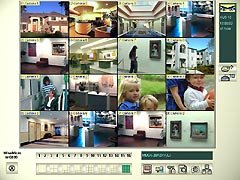 A securely-connected home also can be an intelligent home — one that is wired to take care of itself and alert you to any problems, rather than the other way around. Improving safety and security is a prime concern in a securely-connected home.
Imagine a situation where there is a fire. An intelligent house can shut off the HVAC unit to avoid feeding the flames with oxygen. It also might shut off certain large appliances in the house or even main valves such as the natural gas.
Another more subtle application would be to monitor the presence of devices within the home. Homeowners would certainly like to know if their expensive plasma TV were in the process of being stolen. A securely-connected home could easily generate an alarm the instant a television is moved.
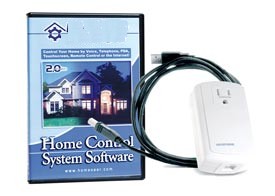
The benefits of a securely-connected home to homeowners are practically limitless. With the right surveillance system homes can offer everything from remote security and appliance control, to energy cost savings.
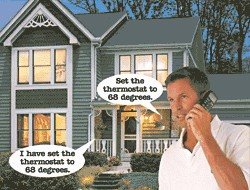
 There’s really no limit to where securely-connected hometechnology may take us.
All we have to do is be willing to embrace this new technology.

Leave a Reply
You must be logged in to post a comment.